

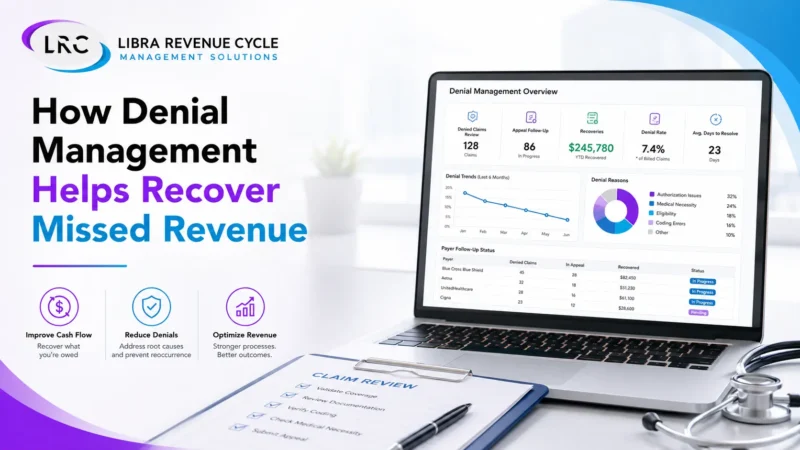
Claim denials are a common challenge in healthcare billing. Some denials are simple to correct, while others require deeper review, payer follow-up, documentation support, or appeal action.
The real problem is not just the denial itself. The bigger issue is what happens when denied claims are not worked quickly and consistently.
Unresolved denials can age, become harder to recover, and quietly reduce revenue.
Why Claims Get Denied
Denials can happen for many reasons, including:
- Eligibility or coverage issues
- Missing authorization
- Incorrect CPT or ICD-10 codes
- Modifier errors
- Incomplete documentation
- Medical necessity questions
- Payer-specific rule changes
- Timely filing problems
Without a clear process, these issues can repeat again and again.
Denial Management Is More Than Appeal Submission
Strong denial management is not just about sending appeals. It starts with understanding why the denial happened.
A good denial management process should include:
- Reviewing denied claims
- Identifying denial reasons
- Correcting claim or documentation issues
- Preparing appeals when needed
- Following up with payers
- Tracking recovery progress
- Reporting denial trends
This helps recover revenue and reduce repeat problems over time.
Why Denial Trends Matter
If the same denial reason keeps appearing, it usually points to a workflow issue. It may be related to eligibility verification, documentation, coding, authorization, or payer rules.
By tracking denial trends, practices can improve their process before more claims are affected.
How LRCMS Supports Denial Management
LRCMS helps providers manage denied and underpaid claims with a structured follow-up process. We focus on root-cause review, appeal support, payer communication, and clear reporting so your team can see what is being recovered and what needs attention.
Final Thoughts
Denials are not always avoidable, but many can be reduced with the right process.
A strong denial management strategy helps protect revenue, improve cash flow, and give providers better visibility into claim performance.